

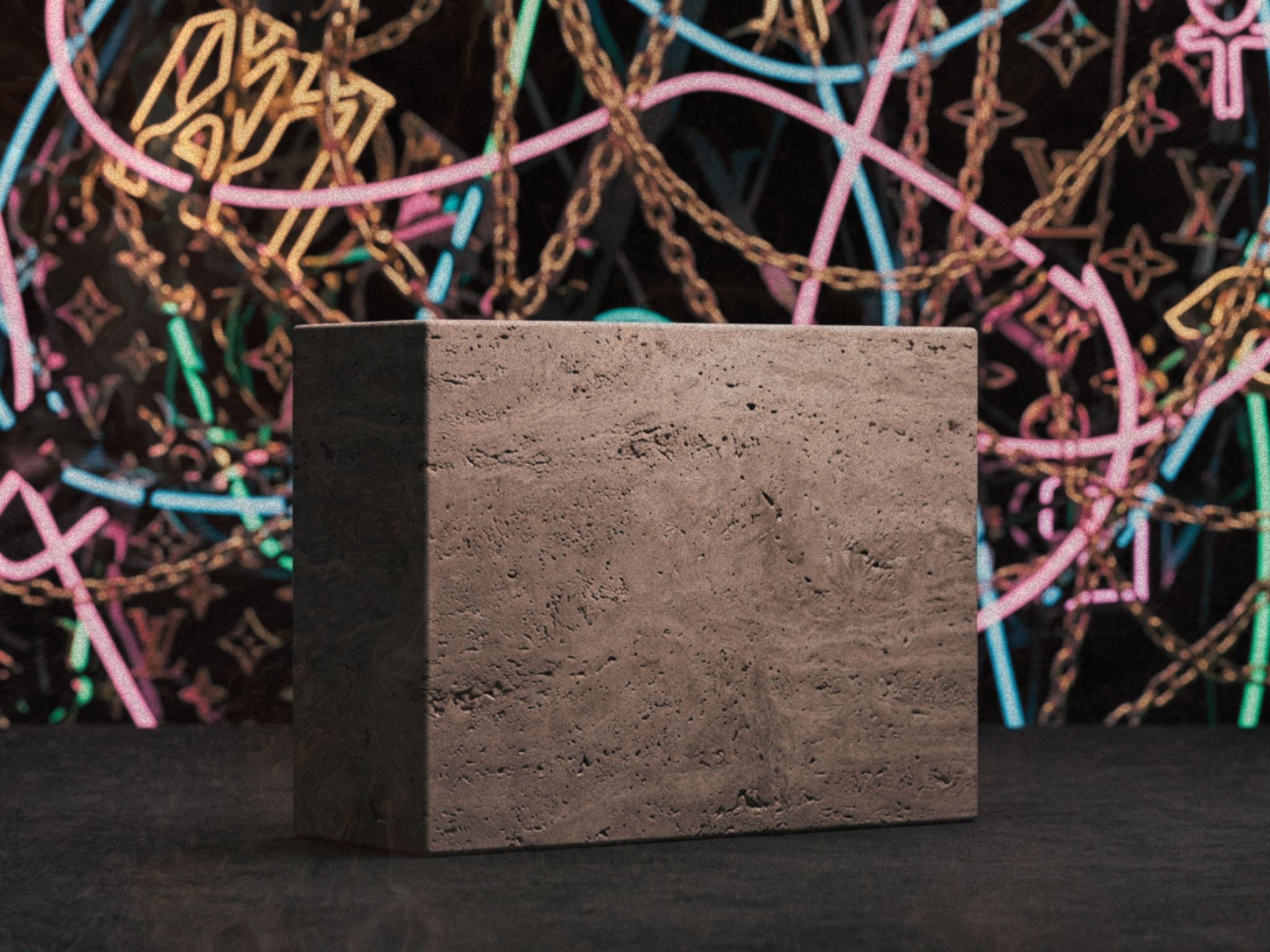
There is a particular kind of dissonance that has settled over the luxury sector in recent years. This has been felt most clearly by the very consumers these brands were designed for, even more than analysts.
Consumers are spending. But something feels thinner. Not the product, necessarily. The experience of the brand. The sense that what was once rare has been made legible to everyone, marketed to everyone, placed in everyone’s feed. The sense that the thing they were buying has been diluted somewhere between the campaign and the checkout. Mostly, beyond the object, but its meaning. Luxury, as a category, has a visibility problem. And it is not the kind of visibility you solve by doing more of the same.
This is the dilution problem.
When visibility becomes the primary strategy, exclusivity collapses. This is not a complex equation. The value of something rare is contingent on its remaining so. Thus, not physically, but perceptually. The moment a brand becomes something you encounter everywhere, the relationship between the brand and scarcity is severed. Price remains, but prestige begins to migrate.
This is what happened, quietly but unmistakably, to several of the legacy houses. Gucci under Alessandro Michele produced work that was genuinely culturally potent. Yet, the licensing, the ubiquity, the algorithmic saturation eventually eroded the very mystique the work had generated. As soon as the aesthetic was everywhere, it had already lost the quality that made it matter: its sense of belonging to a particular world you had to understand to enter.
Bottega Veneta made the opposite choice. Under Daniel Lee, the brand deleted its social media presence entirely. At a moment when every fashion house was competing for impressions, Bottega withdrew. The effect was not invisibility; it was intrigue. In the absence of constant broadcasting, desire recalibrated. The brand felt like something discovered rather than served. The restraint was the strategy.
That tension of broadcast versus withholding, abundance versus scarcity of exposure, is where the real question of contemporary prestige sits.
Here lies the architecture of real prestige.
What elite luxury now operates on is not display. It is the architecture of perception. It is such architecture that has three structural elements.
The first is an invisible advantage. The most valuable layer of genuine prestige is what cannot be easily seen: time efficiency, frictionless access, proximity to rare knowledge or rare people. This is what private itineraries, invitation networks, and deeply curated experiences deliver. Not the thing itself, but the intelligence embedded in the curation of the thing. You are not buying a product; you are entering a system of consideration that someone else has already moved through on your behalf through exceptional judgment.
The second is curated reality. Not more options, but better ones. The removal of noise as a service. A sense that every detail has been considered, yet most have been edited out. This is what separates the brands operating at the highest tier from those merely operating at the highest price point. LVMH understands this at the conglomerate level. The portfolio is not a random acquisition; it is a system of distinct worlds, each internally coherent, each guarded against dilution by the others.
The third is controlled exposure. The less something needs to announce itself, the more powerful it tends to become. Ubiquity erodes mystique. Restraint restores it. This is why the most potent luxury experiences today are often invisible to those outside them. It’s certainly not as a pose, but as a deliberate architectural choice. The perimeter is part of the product.
Now, think paradoxes and their demands.
Here is the difficulty: the more a brand tries to prove it is luxury, the less it feels like it. Explanation is the enemy of authority. The need to demonstrate prestige is itself evidence of its absence.
This creates a real discipline requirement for brands operating in this space. Not more production, rather, more precision. Not a wider reach, rather a deeper resonance with a carefully defined stratum. The goal is not to be known by everyone, but to be unmistakable to the right people, and to have built enough coherence that those right people find each other through you.
What looks like a decline in luxury is actually a transition. From a model built on visibility and acquisition, to one built on experience architecture and perception design. The former scales easily and decays quickly. The latter compounds, because they are built on judgment. This judgment, unlike content, does not replicate easily.
The question becomes: what changes going forward?
The brands that sustain genuine prestige in the coming decade will be those that made peace with a difficult constraint: they cannot be for everyone, and they should not try to be.
They will design for specificity. They will build environments where the quality is felt as inevitability rather than announced as aspiration. They will understand that in an era where luxury is a template anyone can purchase, the only defensible position is meaning that cannot be replicated.
This will not be because it is protected, but because it requires a level of coherence, depth, and sustained judgment that most operators will not sustain long enough to accumulate.
Prestige is no longer what you can show. It is what others recognise, simply, without you needing to explain it.
Access HÉMIN Co. intelligence briefings
Request strategic insights delivery to your inbox
Related Posts
The Death of Content Creation and What Elite Brands Are Building Instead
In an age of infinite content, the only real scarcity is a mind you can…
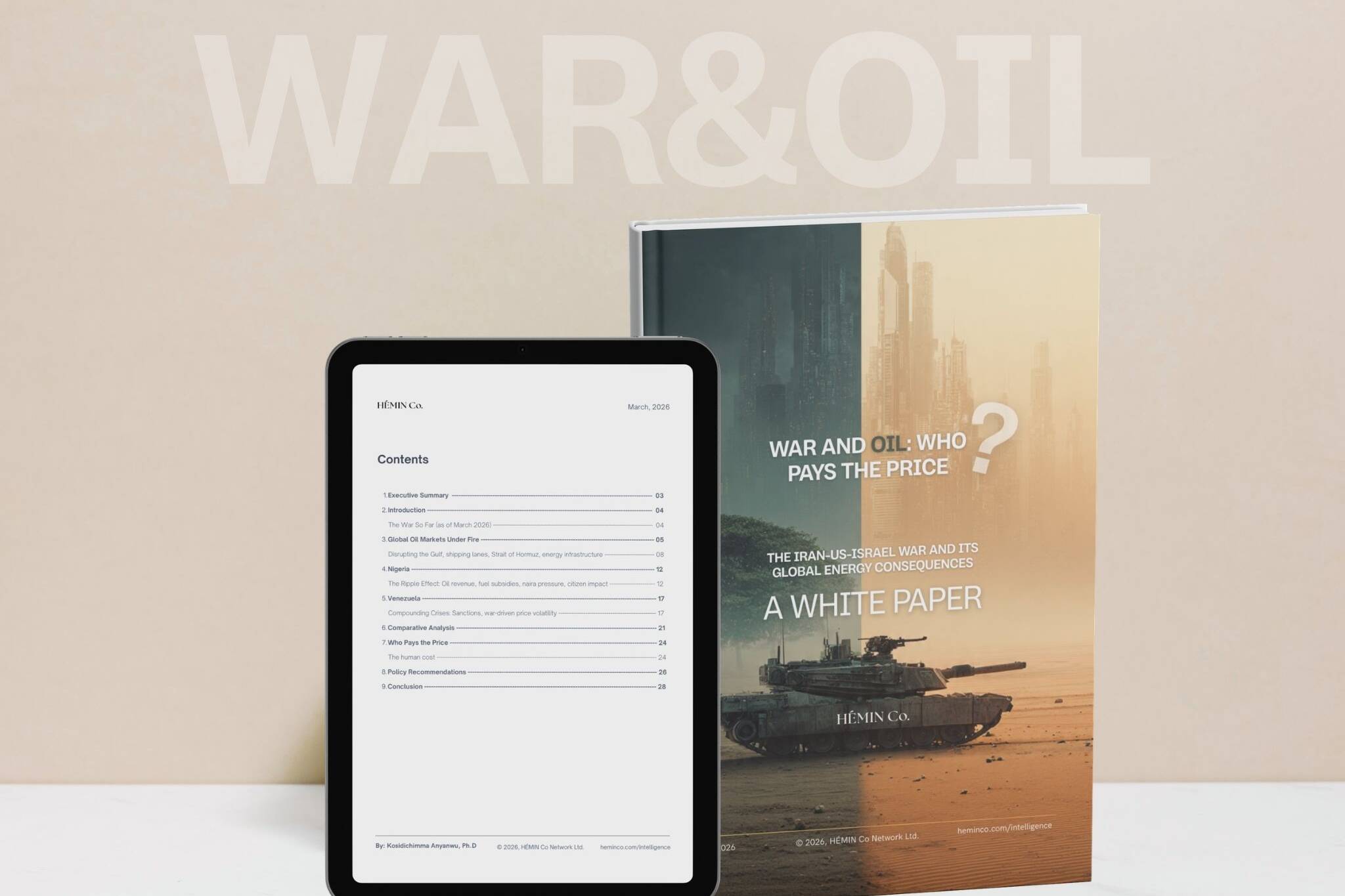
War and Oil: Who Pays the Price?
How the US-Iran War and Israel-Iran Conflict Are Driving a Global Energy…
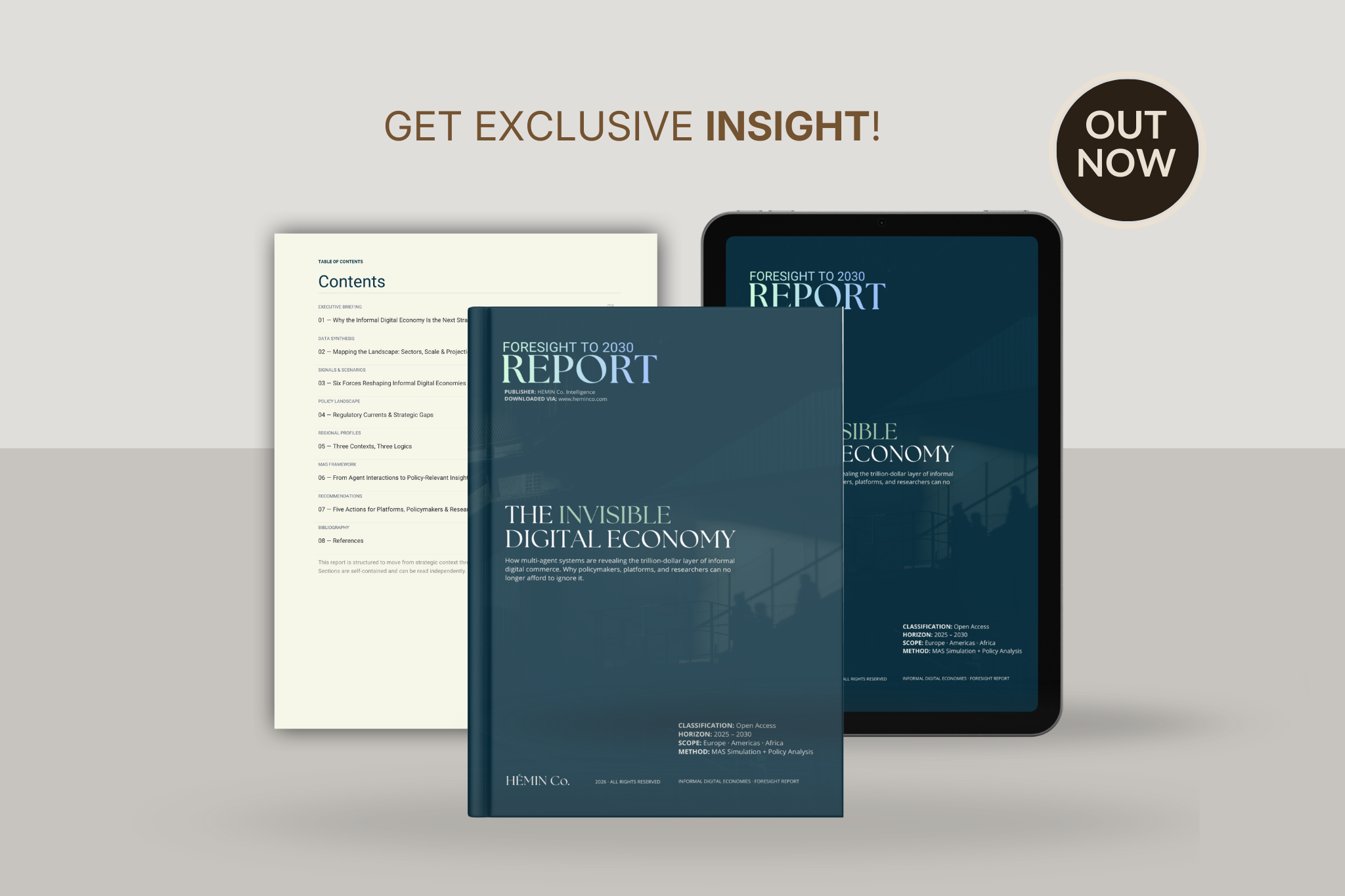
Foresight to 2030: The Invisible Digital Economy Report
How multi-agent systems are revealing the trillion-dollar layer of informal…